Relocating to Idaho Falls

A local's honest guide to moving to Southeast Idaho, cost of living, jobs, neighborhoods, schools, and how to buy a home from out of state.

Idaho Falls at a Glance

The numbers relocating buyers ask about first.

~$415K
Median Home Price
~17%
Below U.S. Cost of Living
<3.5%
Unemployment Rate
5.8%
Flat State Income Tax

Why People Are Moving to Idaho Falls

About 40% of our buyers in 2026 are relocating from out of state, California first, then Washington, Colorado, Utah, Arizona, and Texas. The draw is consistent: a lower-cost, less-crowded version of the Intermountain West, with a real economy behind it and world-class recreation out the back door. Idaho Falls isn't selling a fantasy. It's a genuine regional hub with room to breathe.

  • Cost of living: roughly 40–55% lower than California metros and 25–35% lower than Seattle or Denver, with housing about 41% below the national average.
  • Housing that makes sense: a ~$415K median versus $900K+ in equivalent Utah and California markets, often for a newer home with land.
  • A tax structure that rewards the move Idaho's flat 5.8% income tax, ~0.6–0.7% effective property tax, and no state-level exit or wealth tax.
  • Outdoor access most places charge a premium for: world-class fly fishing, 90 minutes to Yellowstone and the Tetons, and four ski mountains within two hours.
  • A steady, diversified economy: anchored by Idaho National Laboratory and healthcare, with unemployment consistently under 3.5%.
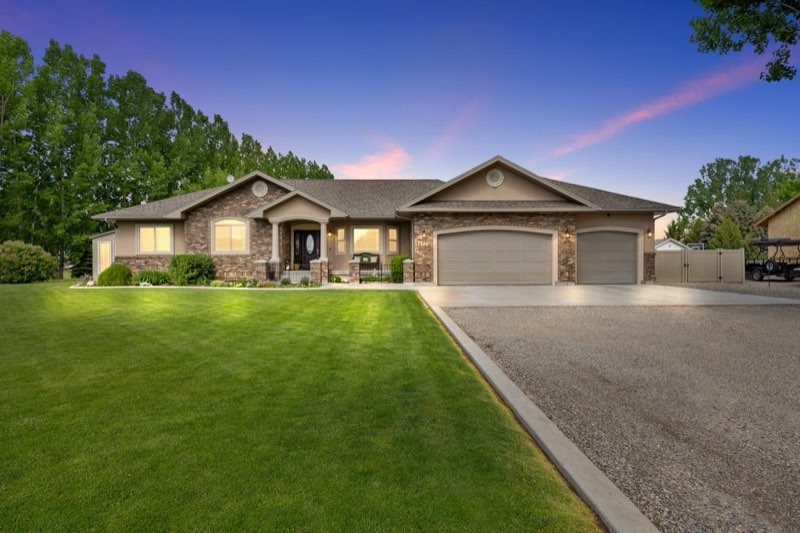
Twilight exterior of a Southeast Idaho home listed by Smith Robinson Real Estate Two70

Cost of Living: The Real Comparison

How Idaho Falls stacks up against the national average and the bigger markets our relocating buyers are leaving.

Category Idaho Falls, ID Los Angeles, CA San Francisco, CA Salt Lake City, UT
Median home price ~$415K ~$960K ~$1.3M ~$560K
Rent (2-bed, monthly) ~$1,300 ~$2,950 ~$3,600 ~$1,800
Groceries (vs. U.S. avg) ~5% below ~10% above ~25% above ~3% below
Gas (per gallon) ~$3.50 ~$4.80 ~$5.00 ~$3.70
Top state income tax 5.8% flat up to 13.3% up to 13.3% 4.55% flat
Effective property tax ~0.6–0.7% ~0.75% ~0.75% ~0.57%

The headline is housing. A median Idaho Falls home costs less than half of Los Angeles and under a third of San Francisco, and often buys a newer home with land. Even against Salt Lake City, a market many Idaho buyers first consider, Idaho Falls runs roughly $145,000 cheaper on the median home and about $500 a month lower on rent. Overall, the cost of living sits about 17% below the U.S. average, with housing about 41% below.

Translated into a monthly budget, a single person lives comfortably on roughly $2,140 a month and a family of four on about $4,670, before any unusual debt or luxury spending. For families relocating from the Bay Area, the combined change in housing, income tax, and utilities frequently returns $4,000–$6,000 in monthly cash flow. We break the full math down in our cost of living in Idaho Falls guide.

The Job Market & Major Employers

Idaho Falls has a more diversified economy than its size suggests, understand where you'd fit.

Idaho National Laboratory (INL)

The region's largest employer, roughly 6,000 direct jobs and 20,000+ across the supply chain in engineering, nuclear research, physics, materials science, and cybersecurity. Most roles are federal-contractor positions with competitive salaries and strong benefits, and the workforce is expanding through 2030 on nuclear modernization. Most hires transfer in from out of state and need housing.

Healthcare

The second-largest sector, roughly 5,000 jobs. Eastern Idaho Regional Medical Center (EIRMC), a Level II trauma center, and Mountain View Hospital anchor steady demand for nursing, physician, technician, and administrative roles across the metro.

Corporate, Government & Education

Melaleuca's corporate headquarters (2,000+ employees), local government, the Idaho Falls and Bonneville school districts, and BYU-Idaho in nearby Rexburg round out the base. Small-to-mid manufacturing and a growing downtown retail and hospitality scene add breadth.

Remote Work

A meaningful share of our relocating buyers keep big-city salaries in tech, finance, consulting, and creative fields. Gigabit fiber is standard in most Ammon subdivisions and NE Idaho Falls, with 500 Mbps widely available, and Idaho Falls prices stretch a remote salary further than almost anywhere in the western U.S.

The Honest Caveat

Outside INL and healthcare, the local market for traditional tech, finance, and creative roles is thin. If that's your field, remote work is usually the path. Idaho Falls is not a market for entertainment, fashion, or hospitality at scale, be realistic about your industry before you commit.

A Tight, Stable Labor Market

Unemployment stays below 3.5% year-round, and the INL expansion continues to pull skilled professionals in from higher-cost states. For most engineers, medical professionals, and remote workers, the economy is stable and growing.

Where to Live, by Buyer Type

The best neighborhood depends on who's moving. Here's where each kind of relocating buyer tends to land.

Families

Schools drive the decision

Recommended: Ammon for the higher-testing Bonneville D93 schools (~$410K–$600K), Taylor Crossing for modern floor plans (~$430K–$620K), Sandcreek Commons, and Iona/Ucon for a rural feel that still feeds D93 (~$380K–$600K). Families with school-age kids heavily prioritize the D93 boundary, verify the exact feed per address.

Professionals

INL engineers & healthcare workers

INL: Ammon and Taylor Crossing for the short commute and newer construction. Healthcare: NE Idaho Falls, walkable to EIRMC with greenbelt access, or Iona for a quieter 10-minute drive to both hospitals. Both cohorts value newer builds, home offices, and fast fiber.

Retirees & Empty Nesters

Single-level, low-maintenance, walkable

Recommended: greenbelt-adjacent NE Idaho Falls, Lincoln Heights, single-level homes in established Ammon, and 55+ communities in south Idaho Falls. Many buyers here downsize square footage while upgrading lot quality, and the affordability math is strongest on a fixed income.

Remote Workers

Fiber, space, and lifestyle

Recommended: Ammon or Iona for D93 schools, new construction, and gigabit fiber, or character homes in NE Idaho Falls if walkability matters more than square footage. A dedicated home office is usually non-negotiable, and higher budgets increasingly land in South Ammon custom builds or larger Iona lots.

Prefer to weigh a smaller, quieter market? Many of our relocating buyers also consider Rexburg, the BYU-Idaho college town 30 minutes north, for its lower price point and strong rental demand. For a deeper block-by-block breakdown of the Idaho Falls metro itself, from the Country Club north end to the affordable west side, see our full Idaho Falls real estate page.

Schools, and the Tradeoffs Nobody Mentions

Two districts split the metro, and the difference between them is a measurable price driver.

Idaho Falls School District 91 (D91) is the older, established city district covering Idaho Falls proper. It has strong arts and music programs, and Idaho Falls High School graduates go on to top universities. Some schools are stronger than others, verify the feed pattern for any specific address.

Bonneville Joint School District 93 (D93) serves Ammon, Iona, Ucon, and the east bench. It consistently posts higher state test scores with newer facilities, the single biggest reason Ammon home prices run 10–15% above equivalent D91 homes. Relocating families with school-age kids overwhelmingly prioritize the D93 boundary.

Private and charter options are well-established, including American Heritage Charter, White Pine Charter, and several religious schools. Homeschooling is legal, popular, and well-supported across Idaho. And BYU-Idaho, a major LDS-affiliated university, sits 30 minutes north in Rexburg.

Moving From a Bigger Market

What to expect if you're leaving California, the Wasatch Front, or the Pacific Northwest, the good and the honest tradeoffs.

Most relocators from bigger markets are thrilled with the move. The ones who have the best experience did their homework first. If you're coming from a high-cost metro, three things tend to define the transition. First, the cash-flow shift is real: housing, income tax, and low hydroelectric-powered utility rates combine into a structural change in your monthly budget, not a rounding error. A $1.2M Bay Area starter home is a $415K mid-tier Idaho Falls home, often newer and on more land.

Second, winter is the most common surprise. Average January lows near 13°F and 30–40 inches of annual snow catch coastal transplants off guard. The cold is dry, which makes it feel milder than equivalent midwest temperatures, roads are well-plowed, and most California buyers invest in a 4WD vehicle within the first year. If you can embrace it, skiing, snowmobiling, cozy-at-home culture, it becomes a feature. If cold winters are a dealbreaker, be honest with yourself now.

Third, the culture is different. Southeast Idaho is politically conservative, family-oriented, and has a significant LDS population (roughly 30–40% of Bonneville County). Many transplants find community quickly and thrive; some feel isolated if their lifestyle differs sharply from the local norm. We'd rather you know that upfront than be surprised six months in.

We've written detailed, market-specific playbooks for the moves we see most often: California to Idaho Falls (including the exit-tax and residency questions), Seattle to Idaho Falls, and Texas to Idaho Falls.
See Idaho Falls Before You Arrive

A cinematic tour of the city, its neighborhoods, and the lifestyle, shot by our in-house media team.

Relocation Tour, Coming Soon

Our cinematic Idaho Falls relocation film drops in this space. Producing every frame in-house is how we give out-of-state buyers a true feel for the city, the same media engine behind 1M+ monthly content views.

Video placeholder, embed the in-house relocation film here once published.

How to Buy From Out of State

We close 15–20 remote purchases a year. The workflow is refined, and the in-house media is what makes buying sight-unseen actually work.

Most agents can't credibly sell you a home you've never walked. We can, because we produce cinematic FPV and drone video in-house for every serious contender, not a phone clip forwarded from the listing agent. You see the whole property, the lot, and the neighborhood context the way you would in person. That media edge, paired with 1,000+ homes sold and $500M+ in career volume, is why buyers who purchase remotely almost always report the experience matched or exceeded expectations.

  1. Pre-approval first. A local lender we trust gets you a firm pre-approval letter so you can move decisively when the right home appears.
  2. Intake call (30–60 min). We talk through priorities, lifestyle, commute, budget, and must-haves versus nice-to-haves.
  3. A tight, matched shortlist. We send curated listings with notes daily as new inventory hits the market, filtered aggressively so you're not drowning in options.
  4. Live virtual tours. FaceTime walkthroughs for your top homes, at your pace, with questions answered in real time and follow-up video of any concern.
  5. In-house FPV & drone video. Cinematic walkthroughs for serious contenders so you see the full property, lot, and setting.
  6. Offer strategy. We advise on price and terms; your agent handles contingencies, inspection periods, and timeline.
  7. Remote inspection. The inspector sends live video during the inspection so you can ask questions mid-walk, we'll meet them on-site if you want someone local present.
  8. Remote online notarization. Closing documents executed via RON or a mobile notary in your current state, with a wire transfer at close.
  9. Keys on arrival. We meet you at the home the day you arrive with keys and a local-resource package, doctors, mechanic, grocery, utilities, and more.

Typical decision-to-closing runs 60–120 days, faster if you're pre-approved and decisive. We recommend at least one in-person visit if your schedule allows, but it's genuinely not required. Ready to see what's on the market? Browse current Idaho Falls listings, or if you're selling first, get a free home valuation to know exactly what you're working with.

Relocation FAQ

Relocating to Idaho Falls: Common Questions

Straight answers for out-of-state buyers considering the move.

Is Idaho Falls a good place to relocate to in 2026?+

For the right person, yes. It's a ~65,000-person regional hub (about 150K metro) with a diversified economy anchored by Idaho National Laboratory and healthcare, strong schools, world-class outdoor recreation, and a median home price near $415K, a fraction of California, Seattle, or the Wasatch Front. The honest tradeoffs: cold winters (average January low ~13°F), a conservative, family-oriented culture, and regional-hub-scale amenities.

How does the cost of living compare to bigger markets?+

Overall cost of living runs ~17% below the U.S. average, housing ~41% below. A median Idaho Falls home near $415K compares to ~$960K in Los Angeles, ~$1.3M in San Francisco, and ~$560K in Salt Lake City. Idaho's flat 5.8% income tax is well below California's top 13.3%, property tax runs ~0.6–0.7%, and electricity is a fraction of California rates. Bay Area families relocating report saving $4,000–$6,000 per month.

What is the job market like in Idaho Falls?+

Idaho National Laboratory (INL) is the largest employer, ~6,000 direct jobs and 20,000+ in the supply chain across engineering, physics, nuclear research, and cybersecurity, expanding through the decade. Healthcare is second-largest (EIRMC, Mountain View). Melaleuca's HQ, government, education (BYU-Idaho), and a growing remote-work cohort round it out. Unemployment stays below 3.5% year-round.

Can I buy a home without visiting first?+

Yes, we do it regularly, 15–20 remote purchases per year. The workflow uses in-house virtual and FPV drone video tours, live FaceTime walkthroughs, remote home inspection with live video, remote online notarization, and a wire transfer at close. We meet you at the home with keys and a local-resource package on arrival. An in-person visit is recommended if your schedule allows, but not required.

Where should I live in Idaho Falls when relocating?+

It depends on your buyer type. Families favor Ammon for D93 schools ($410K–$600K) or Taylor Crossing/Sandcreek Commons for newer construction. INL professionals choose Ammon for the commute. Healthcare workers and retirees gravitate to NE Idaho Falls near the greenbelt and hospitals, or single-level homes in Lincoln Heights. Remote workers with families look to Ammon or Iona for D93 schools plus gigabit fiber.

What are winters like in Idaho Falls?+

Cold and dry. Average January low ~13°F, high ~31°F, with 30–40 inches of snow annually and occasional subzero snaps. The low humidity makes cold feel milder than midwest equivalents, roads are well-plowed, and most homes have efficient gas heating. Summers are warm (80–92°F) with cool nights and low humidity. Many relocators treat winter as a feature, skiing, snowmobiling, cozy-at-home culture.

Start Your Move to Idaho Falls

The right first step is a conversation, not signing anything. We offer a free 30–60 minute relocation consultation: neighborhoods, real cost-of-living math, and a realistic timeline for your profile. If you're selling first, we'll tell you exactly what your current home is worth.